
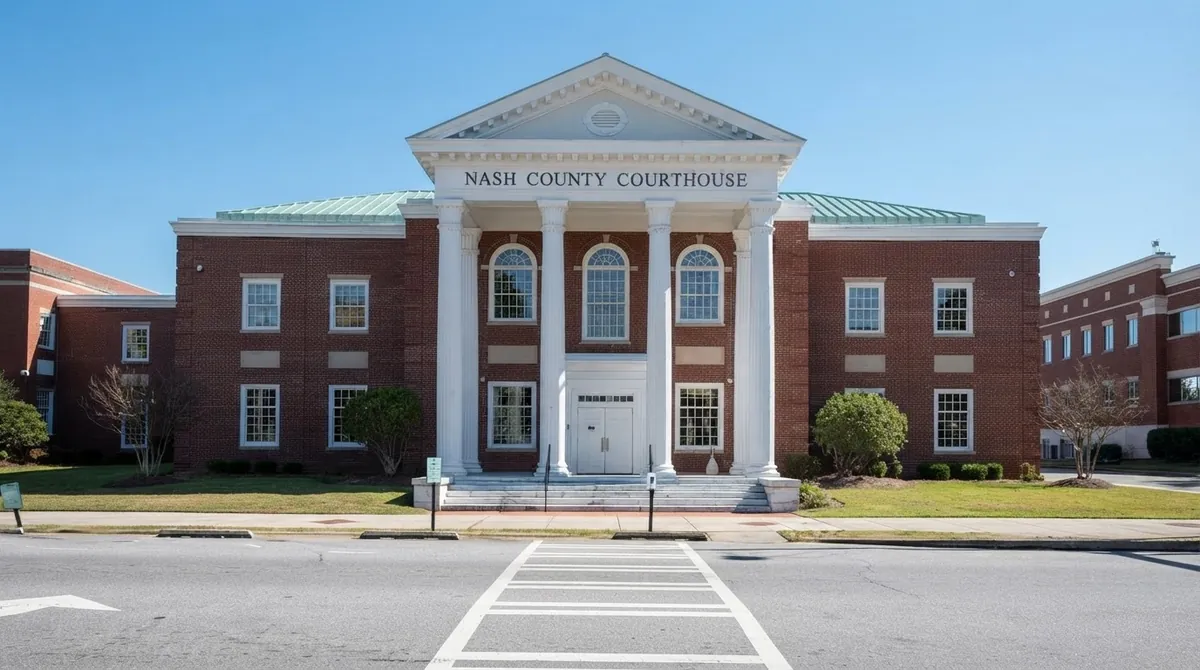
Court records in Nash County, North Carolina, are maintained by the Clerk of the District Court and are accessible through online tools, official court portals, and directly at the court office. NashCourt.us is a convenient resource for finding publicly available information about county court records. Additionally, you can use the North Carolina Judicial Branch court records portal, contact the court clerk's office, or visit other state government resources to obtain the necessary documents.
Nash Court System Overview
Nash County is part of Judicial District 7A (Superior Court Division) and the 7th Judicial District (District Court Division) of North Carolina. Judicial District 7A exclusively serves Nash County. The District Court handles both criminal and civil cases, and the magistrate division operates under its jurisdiction—magistrates conduct initial hearings, handle small claims, and traffic violations.
The courthouse is located in the city of Nashville:
More detailed information about court services, schedules, and contacts can be found on the Nash County page on the North Carolina Judicial Branch website.
Courts Serving Nash
Residents of the county are served by several judicial institutions—from county to federal courts.
Nash County District Court (District 7)
Nash County Superior Court (Division 7A)
Nash County Magistrate's Office
U.S. District Court — Eastern District of North Carolina
Nash County belongs to the Eastern District of the federal court of North Carolina.
U.S. Bankruptcy Court — Eastern District of North Carolina
There are no municipal courts in Nash County—all state-level cases are heard in the District and Superior Courts.
What Types of Cases Nash Courts Hear
Nash County courts hear a wide range of cases. Here are the main categories:
- Criminal cases: felonies, misdemeanors, infractions
- Civil cases: claims of various scales, including small claims
- Family law: divorce, custody, alimony, protective orders
- Probate: estate administration, guardianship, trust management
- Juvenile cases: offenses, child protection, adoption
- Traffic violations and driving while impaired (DWI) cases
Each category is handled in the appropriate court division—details are provided below.
District Court Cases in Nash
The District Court in Nash County handles misdemeanors, infractions, civil claims up to $25,000, family law cases, and juvenile matters. A District Court judge presides over these sessions. Criminal cases usually begin with an arrest or warrant issuance, after which the accused is brought to the first court appearance.
Civil claims are filed through the clerk's office. Cases are assigned to judges according to the internal schedule of the judicial district. Appeals from the Magistrate's Court also go to the District Court for de novo review.
The Superior Court handles serious criminal offenses after transfer from the District Court, as well as civil cases where the claim amount exceeds $25,000.
Magistrate Court Cases in Nash
Magistrates in Nash County perform several important functions. They issue arrest and search warrants, conduct initial appearances of defendants, and set bail. Small claims up to $10,000 are handled by the magistrate.
Additionally, magistrates make decisions regarding:
- Traffic violations
- Undisputed misdemeanors where the defendant pleads guilty
- Eviction cases from rented housing
- Preliminary hearings in serious criminal cases
The magistrate's office operates 24/7 for processing warrants and initial appearances.
Family Law, Probate, and Juvenile Matters in Nash
Family Law
Divorce, child custody, alimony, protective orders from domestic violence, and paternity cases are handled by the District Court. Divorce certificates from 1958 can be obtained through NC Vital Records or the court clerk.
Probate
The Clerk of Superior Court acts as the probate judge. They handle applications for opening probate cases, appointing guardians, and estate administrators. These cases are usually conducted in the same courthouse on West Washington Street.
Juvenile Matters
Juvenile cases—juvenile offenses, child protection, and adoption—are handled by the District Court. Juvenile case records are confidential under North Carolina law. For information about the Guardian ad Litem program, contact via the Nash County page on the court branch website.
How Cases Move Through the Nash Court System
- Case Initiation. A criminal case begins with the filing of a complaint or issuance of a warrant. A civil case starts with the filing of a complaint with the clerk's office.
- Judge Assignment. The case is assigned according to category and the internal schedule of the judicial district.
- First Hearing. In criminal cases, this is the arraignment. In civil cases, it is a preliminary conference to set the schedule.
- Pre-trial Phase. Parties exchange evidence (discovery), file motions. In criminal cases, plea bargaining is possible.
- Trial or Settlement. The case concludes with a verdict, settlement, default judgment, or guilty plea.
- Post-Decision. Appeals, judgment enforcement, or sentencing may occur.
Court dates can be checked through the court date search on the NC Courts portal.
Court Administration, Local Rules, and Public Access in Nash
The administrative judge of District 7A oversees the general management of court activities. The Clerk of Court Department provides daily visitor services, case storage, and issuance of document copies.
Local rules of the judicial district are published on the North Carolina Judicial Branch website. It is recommended to check them before submitting documents.
Public Access to Records
Under North Carolina law, most court records are publicly accessible. Exceptions apply to juvenile cases, sealed cases, and records restricted by court order. A request for public records can be submitted through the public records request form on the NC Courts website or in person at the office.
Participation in Hearings
Most sessions are open to the public. Visitors can attend in person at the courthouse. For remote participation (video link), check with the clerk's office, as it depends on the case type and the decision of the specific judge.
Court Records and Related Court Resources in Nash
- Online Case Search. The Court Records portal on the NC Judicial Branch website allows searching for cases by name, checking criminal history, and submitting expungement requests.
- Session Schedule. Use the session date search to find the required case by name, county, or date range.
- Public Records Request. Through the request page, you can obtain copies of court documents online, by mail, or in person.
- Register of Deeds. The Register of Deeds Office of Nash County maintains property records from 1777, marriage records from 1862, as well as birth and death certificates.
- Birth, Death, and Marriage Certificates. Available through the Vital Records department—births and deaths from 1913, marriages from 1865.
- State Inmate Search. The NC Department of Adult Correction provides information about individuals in state correctional facilities, parolees, and those under supervision. This database does not include information about county jail inmates.
- Nash County Detention Center. The Nash County Detention Center is located behind the courthouse and has a capacity of 259 individuals. Information about inmate visitation (including video visits) is available on the county website.
- Sex Offender Registry. The North Carolina Sex Offender Registry contains public information for citizen protection.
- NC DAC Public Records. The public records portal of the Department of Correction allows searching for information on criminal and civil cases, police reports.
- Nash County Sheriff. The Sheriff's Office is responsible for law enforcement in the county. For emergencies, call 911.
- Tax Search. The online tax record search and GIS map of Nash County help find information about properties and land parcels.
For a general overview of available county resources and court record searches, also visit NashCourt.us.